The erection, representation, display and use of often grotesque figures and objects such as harm-charms to protect against or ward off misfortune, thieves, enemies, sorcery, witchcraft, evil spirits, bad luck...or the Evil Eye, which might be induced and directed by envy.
It is difficult for us to understand how seriously the Evil Eye was taken in the days before modern medicine, perhaps especially in the Roman Empire. All diseases and accidents were attributed to its malevolence being directed towards the sufferers by someone, only sometimes identified, or by an animal. Thus, for example, gonorrhoea was likely caused by the Evil Eye cast by someone disliked or feared, rather than by sexually-transmitted bacteria.
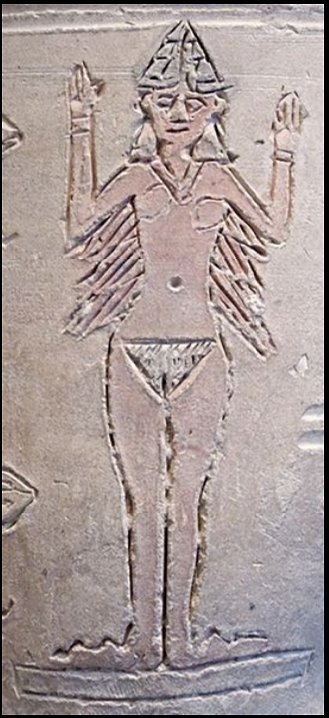
Way back in the mists of time, Sumerians believed in The Look of Death, such as the goddess Inanna (Ishtar) visited on Dumuzi (Tammuz).
The most powerfui prophylactic magic against the Evil Eye was the erect penis. All the penis representations in Roman daily life (in the home, in the streets, everywhere) were apotropaic: penis-lamps, amulets, door-chimes composed of several penises, sculptures or scratchings of penises on buildings, above doorways and so on. There were probably far more in wood or in cloth, maybe there was penis-shaped soap. A large phallus painted on a brothel wall in Pompeii or at the entrance to public baths had nothing to do with sex, but protection.
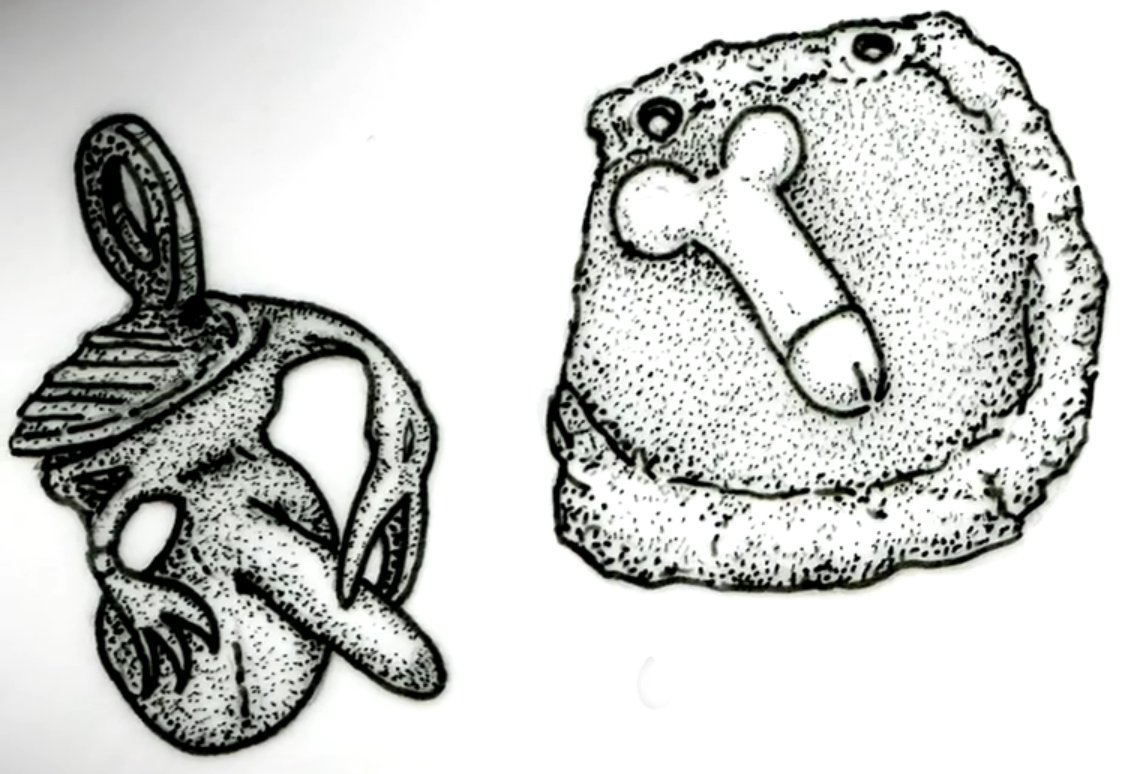
In impressibly large format at Leptis Magna in Syria a doubly-apotropaic
sculpture has been unearthed: a bull-legged phallus whose penis is squirting
semen into (blinding) a vaginesque Evil Eye which is carrying or being
devoured by a ?scorpion.

photo by Sacha Coachman
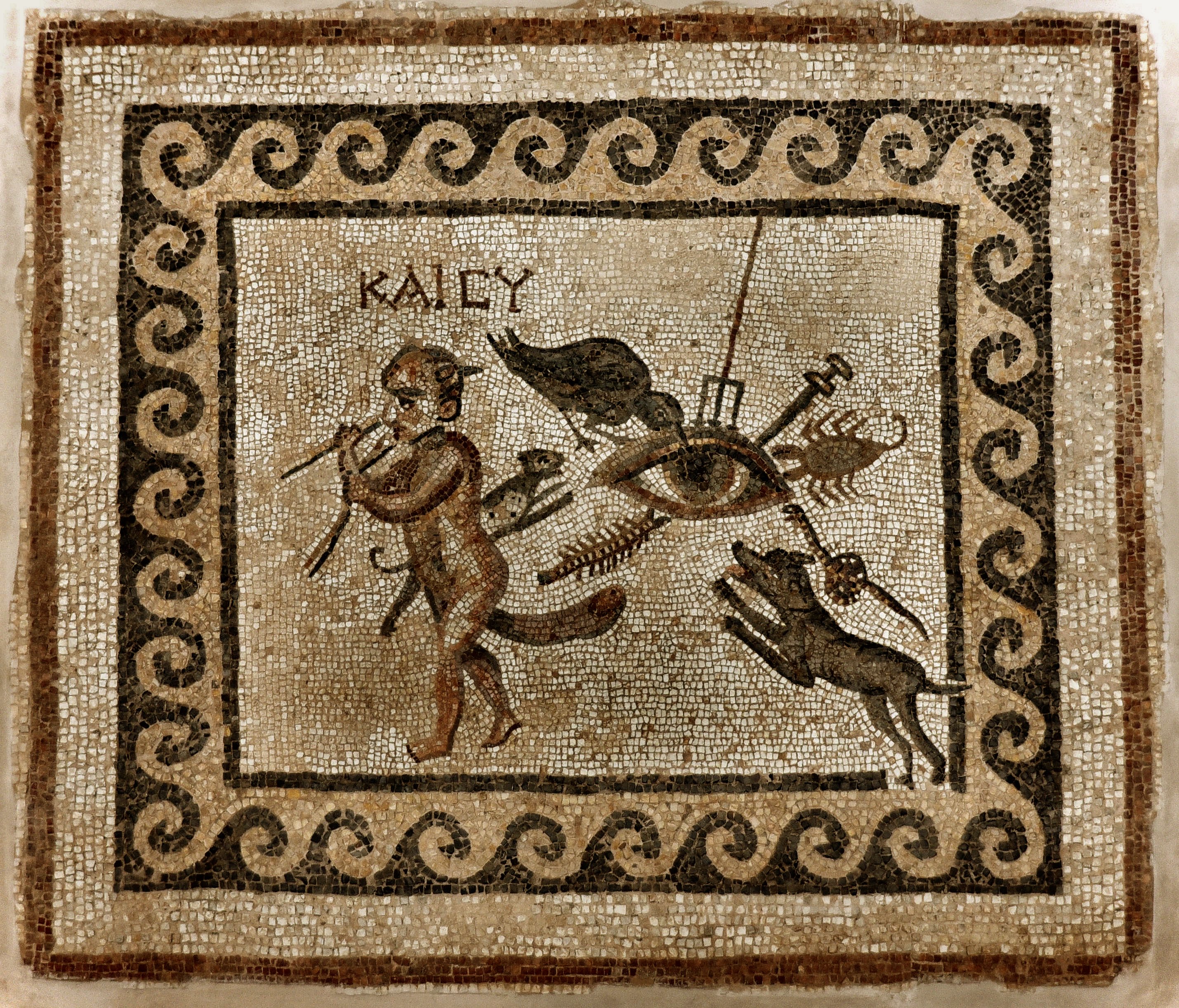
This superb Roman mosaic from Antioch (now in Ankara) depicts the Evil
Eye being attacked by various means and creatures, while being warded
off by a boy with an enormous penis pointing backwards; he is holding
two crossed sticks, as we still cross our fingers. The Greek reads: You
too.
Nicolas
Mengus has written a couple of fine disquisitions on sex
and fascination in antiquity and up to modern times, both of them
in French, and mostly concerned with the ubiquitous phallic objects. On
YouTube
there is a very good lecture on the topic, also in French.
By prudish medieval times the penis had come to be represented by the tongue. The tongue-sticker/poker is a frequent and ambivalent motif in Romanesque sculpture.
Hunreds of years later than the Roman artefacts above, this fork-bearded, tongue-protruding 'merman', at the church of Sant Pere de Galligants in Girona, featuring two eyes on his thighs, probably performed the same apotropaic function. He certainly does not belong to Christianity.

Compare with an ancient Egyptian, exhibitionist image of the god Bes (from the second millennium BC) in the Egyptian Museum in Turin, and with other examples of tongue-stickers on another page.

While philoprogenitive
and amusing Baubo images survive from ancient Egypt,
images of the vulva hardly exist in the Græco-Roman world –
apart from phallic-shaped amulets or charms such as pendants or jewelry
worn or carried to protect the owner from danger, disease, bad luck, or
evil forces.
Rosary and worry beads are, perhaps, debased derivatives. Some people
carry a 'lucky pebble'.
 |
 |
Trumpets can warn - and they can threaten. What to make of this (archangelic ?) capital in the celebrated cloister of L'Estany in Catalonia ?
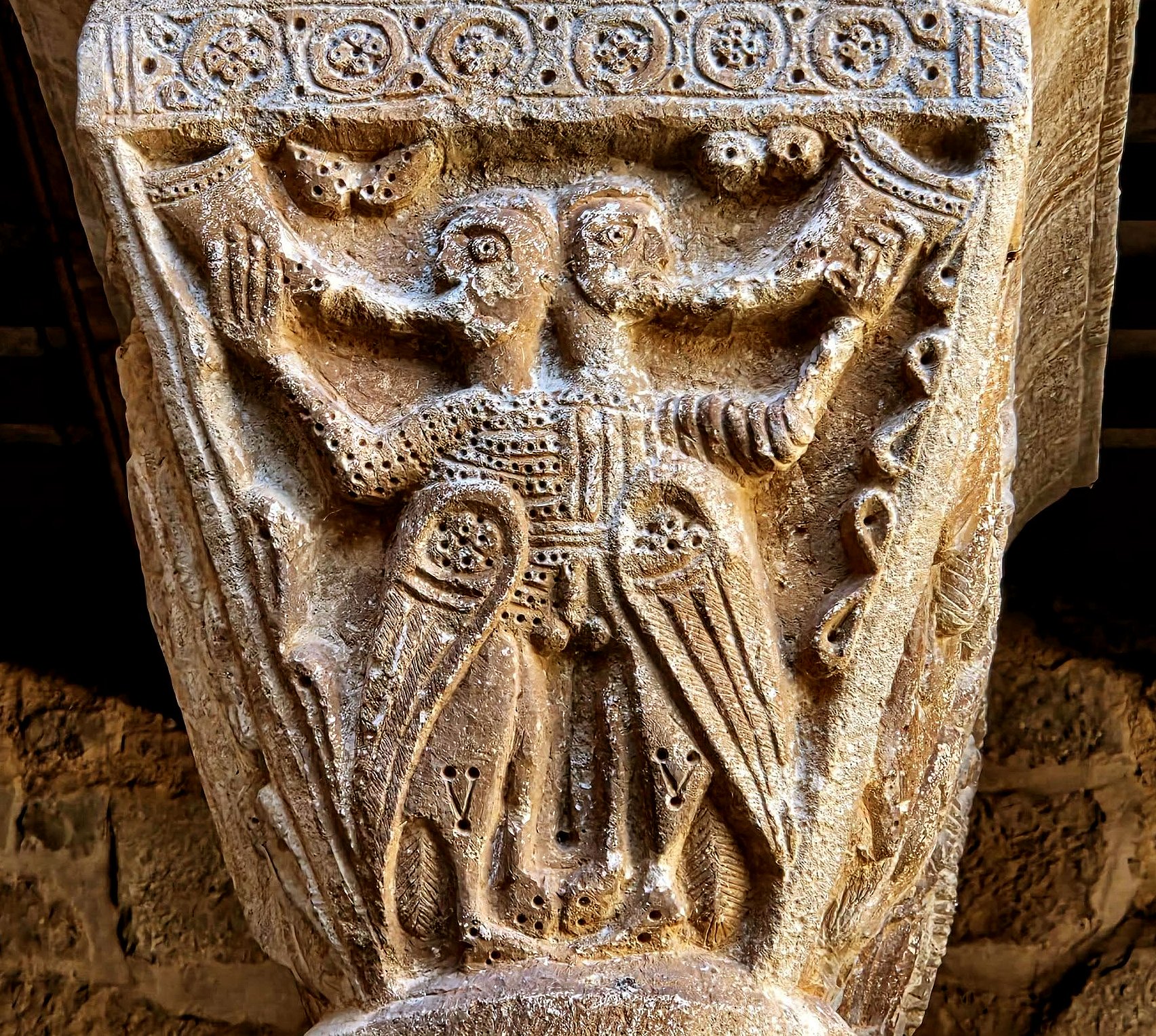
photo by Fabio Casalini
At the other ends
of various scales,
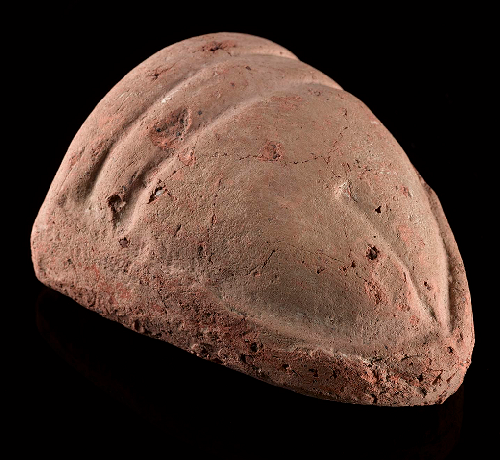
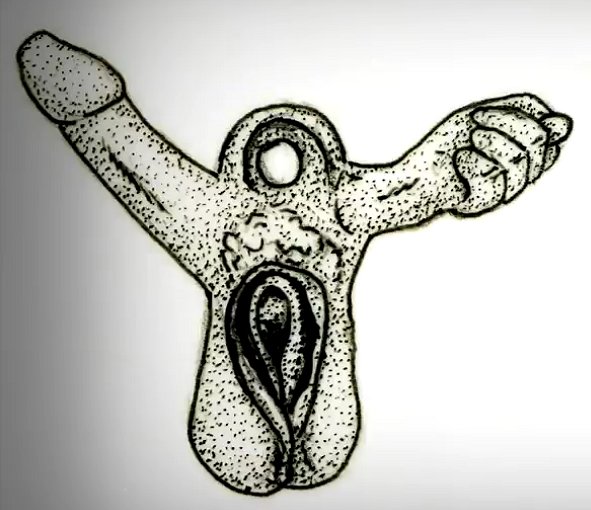
this terra-cotta amulet from Burgundy with its prophylactic protruding
tongue and exuding vulva, suggests a charm to ward against some "female
problem" at a time of high mortality in pregnancy and childbirth.
It is a very crude object, so was probably carried by an impecunious person.
 S
photo by Denis Marlot
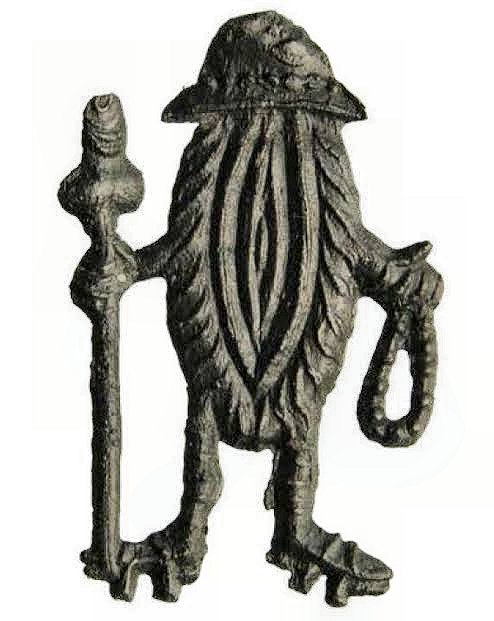
Much later, in post-Romaneque Europe, amulet-sized pilgrim-badges like
this pewter example were worn, presumably for protection. It is a vulva
in boots and a pilgrim's hat (petasus), holding a rosary in one hand and,
in the other, a pilgrim's staff topped with a prophylactic phallic knob.
While post-Roman Europe was littered with 'phallic objects' to inspire or fire the mediæval imagination (despite the bizarre and stifling strictures of Christianity) and phallic pillars survived from pre-Christian cults, there were very few cunnic ones. What survive are tasteful statues of Venus and Demeter, which, when clothed, might have influenced some images of the demure Virgin Mary, especially after the twelfth century when she became a cult within the Catholic church.
So what inspired the praying figure below ? Dating from around 1200 (if not earlier), it vividly reminds Christians in the North of France that the gaping, eye-shaped vagina, while perhaps 'subiiminally' warding off evil, is in fact the Portal to Hell. Might its head have been [dis]graced by a protuding tongue ?

Sens, cathedral of St Etienne.
Some vulva-showers are depicted in the emphatically apotropaic action of pulling up a dress, as at Fuentidueña (Segóvia) which is another figure of this kind that has been vandalised. (See also Lammas in Norfolk, England.) This must represent a frequent action, perhaps an automatic reaction by threatened women, especially in the countryside. Possibly even to frighen off a bear ?

Can it have been inspired by the large and famous marble from one of the town gates of Milan, where a handsomely Roman-looking matron raises her dress in determinedly apotropaic manner to keep evil and danger out of the town - or to comb her pubic hair - unless it is a knife - or a douche - she holds in her right hand ? (Some have thought it to be a phallus!)
The Porta Tosa sculpture (now in the Castle Museum) in turn recalls the exhibitionist figurines of the abovementioned minor Greek/Egyptian deity Baubô, who assisted Persephone by doing the same thing and snapping her out of her Plutonic depression.

Turning to the natural world, the simplest examples of apotropaia are
protective false eyes on butterflies, whose forerunners in evolution were
the eye-spots developed by some hexapods to encourage predators to think
they were being watched by their quarry.
By far the oldest (universal) human apotropaic and prophylactic behaviour patterns and displays are the protective hand, beard or breast presentation, pulling a face or mouth-pulling, genital and pubic display, arse-display, presentation of a grotesque mask, milk-squirting, erection of 'sentinel' or guardian figures, sticking out the tongue, and still today, the raising or pointing of a finger.
Returning to the many Romanesque ithy/mega-phallic males on and in churches, might some (unintentionally) serve the double role of castigating sexual activity while protecting the building ? Or even the builders ? Sculptors and masons might well have very aware of the Evil Eye, given the high accident rate. Sculptors were also treated with great respect, because they had a vast repertoire of themes in their heads, as well as (often superb) skill. How much influence they had on the decision to choose what they carved will never be known. Nor do we know how ordinary people ('peasants') responded to them. The defacements (removal of heads and genitals) are more likely to have been performed by bourgeois or priests of the 18th and 19th centuries.
Some links:
https://en.wikipedia.org/wiki/Apotropaic_magic
https://www.ancientworldmagazine.com/articles/phallus-evil-eye/
https://robin-de-puy-american.wetransfer.com/episode/10
Protecting_the_Troops_Phallic_Carvings_i.pdf

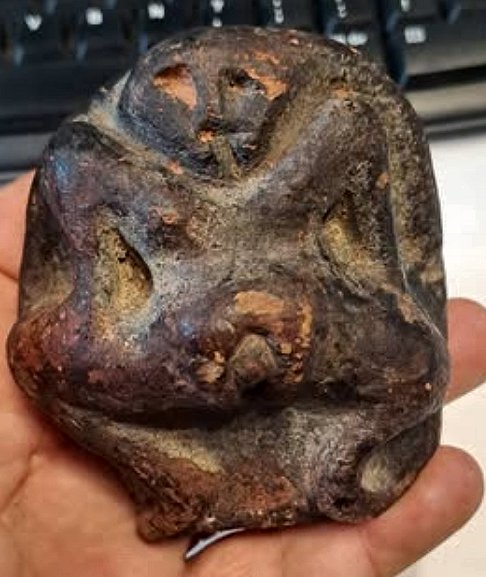
We should also remember
that mediæval Europe was just one small part of the world. Here,
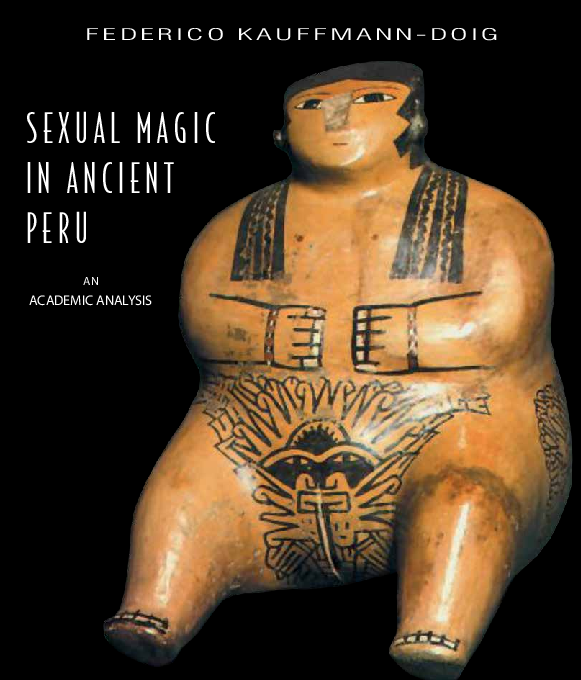
in contrast to all the above and most on this site, is a Peruvian female
exhibitionist with two eyes (of a jaguar ? above her vulva.