SOME NON-EXHIBITIONIST ENTERTAINERS
Entertainers of one kind or another are probably the most
frequent subjects on Romanesque corbel-tables.
It is no exaggeration to say that they were loathed by The Devout.
Popular or 'profane' music was considered not just to
be un-Christian, but probably anti-Christian: the merry road to Hell.
The Church, as proprietor of morals, claimed also to be the proprietor of
music acceptable to God,
within the 'Houses of God' and generally unavailable to the flock of the
Good Shepherd.
Eastern Orthodox Christianity has traditionally deemed
all instruments and secular tunes satanic and a threat to the modesty of
family life.
Bands of itinerant musicians moving from town to town
(via villages) with their 'unholy' instruments
(originating from Muslim Morocco via Spain) encouraged jollity,
drunkenness and 'lewd behaviour'.
If common people were enjoying themselves
the Devil (who cunningly devises catchy tunes) was to blame.
With the musicians came the Jugglers/Joglars/Jongleurs
who performed various universal routines,
some of which involved glimpses (or more) of Unholy Parts of the anatomy.
They are not to be confused with the Troubadours.
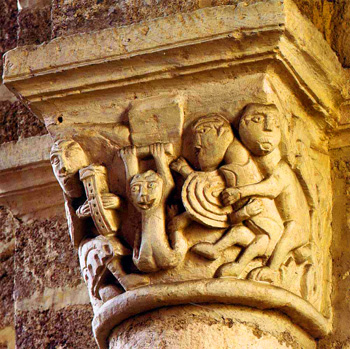
A little troupe, La Chaize-le-Vicomte (Vendée)
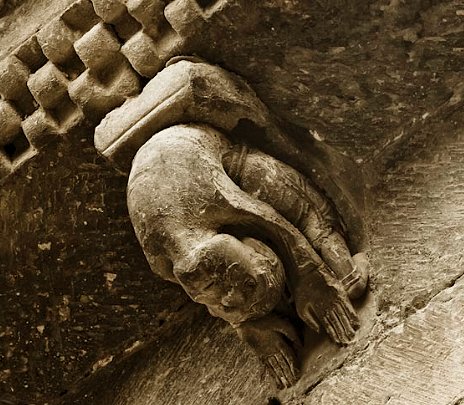
Uncastillo (Zaragoza)

Aulnay (Charente)
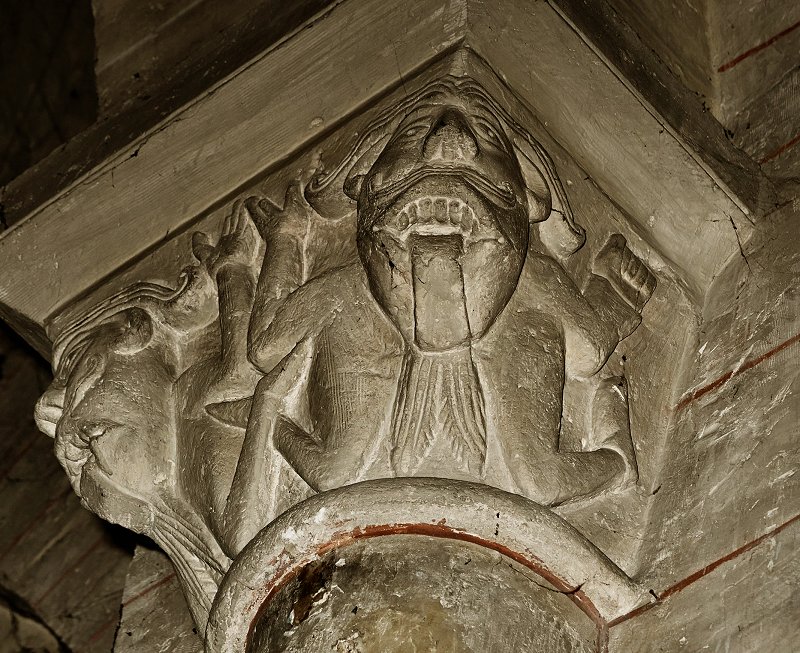
photo by Michael Adlem
Acrobatic tongue-sticker, Saint-Gaultier (Indre)
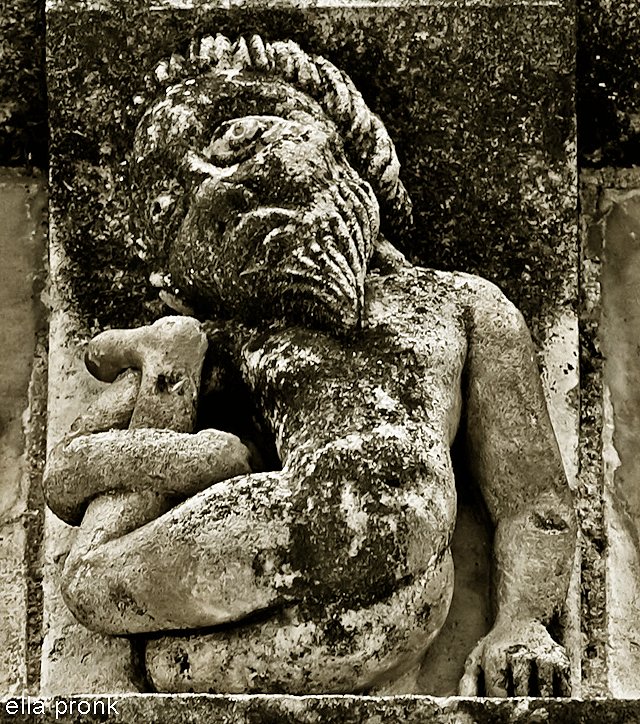
Contortionist, Châteauneuf-sur-Charente (Charente)
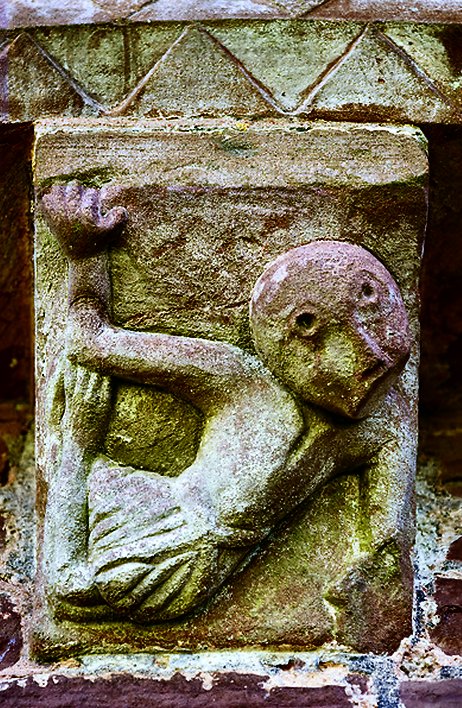
Acrobat or Dancer, Kilpeck (Herefordshire)
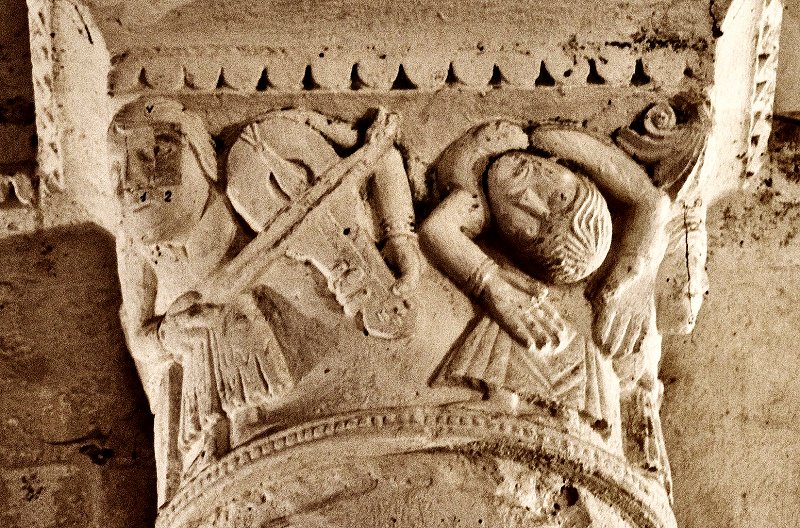
Dancer and rebec-player, Saint-Hilaire-La-Croix (Puy-de-Dôme)

Dancer, Chateauneuf-sur-Charente (Charente).
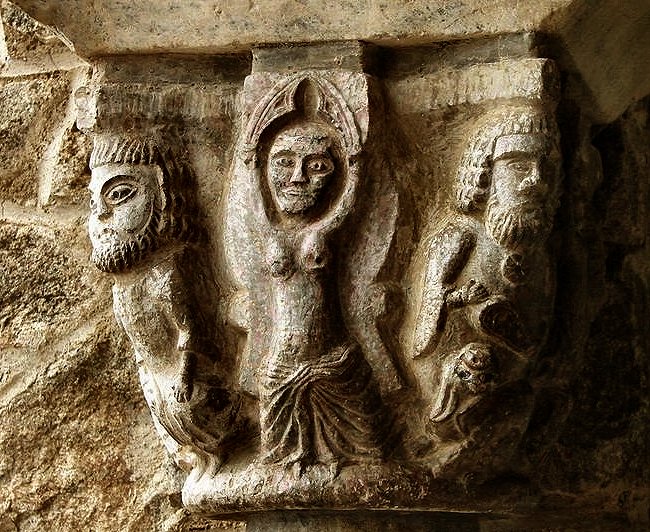
Salome dancing, St-Martin-du-Canigou (Pyrénées-Orientales)
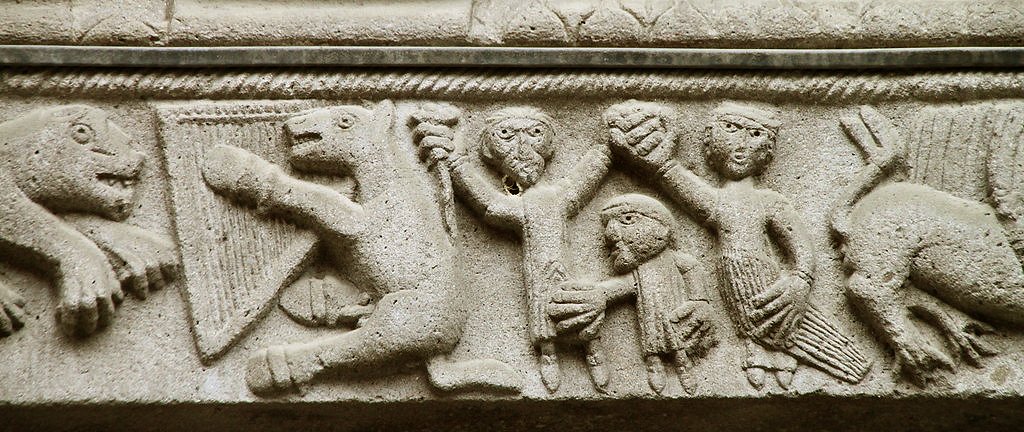
Lintel of the tympanum of the cathedral of Berceto (Parma), with a possibly
ithyphallic bear playing the harp.
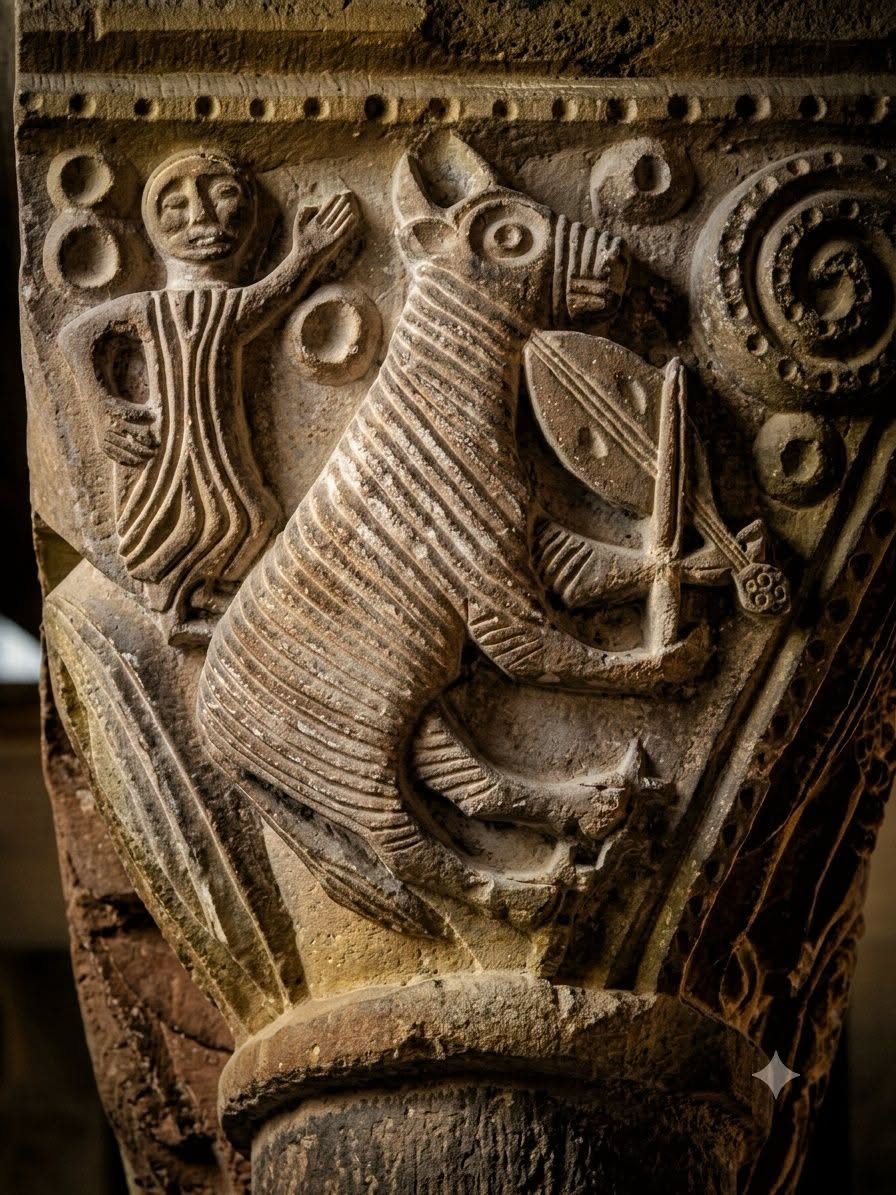
Capital at L'Estany, Catalonia, with a rare image (reminiscent of Cretan
and Spanish bull-cults)
of a woman dancing to the sound of a bullock playing a three-stringed rebec
or vielle.
(Do the circles represent money ?)

Detail of a pulpit at Gropina (Lazio), which depicts an unsexed acrobatic
Luxuria
and a matching two-tailed mermaid with luxuriant hair.
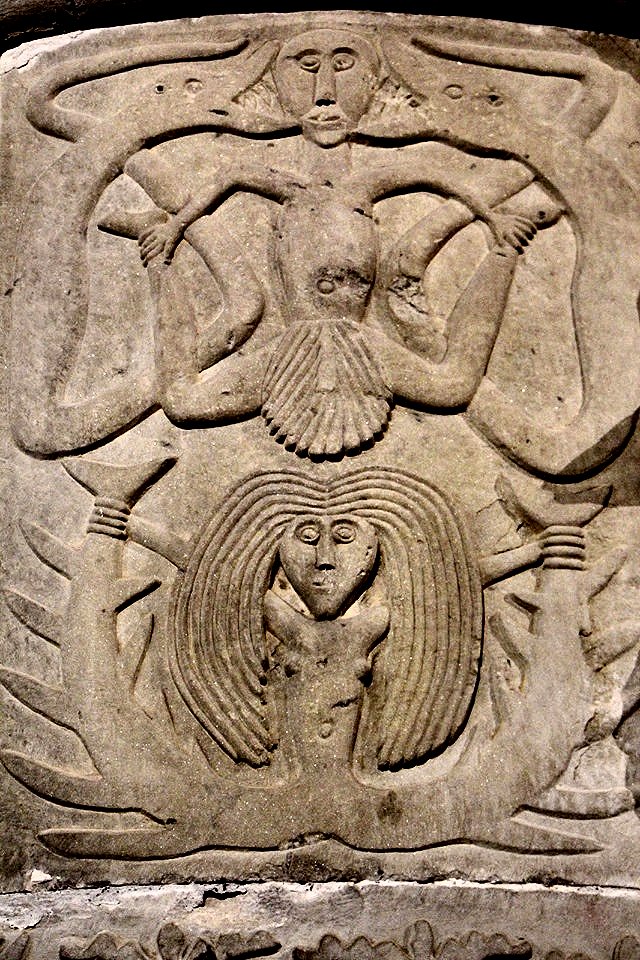
These two figures also echo pre-Romanesque images of Earth and Sea.
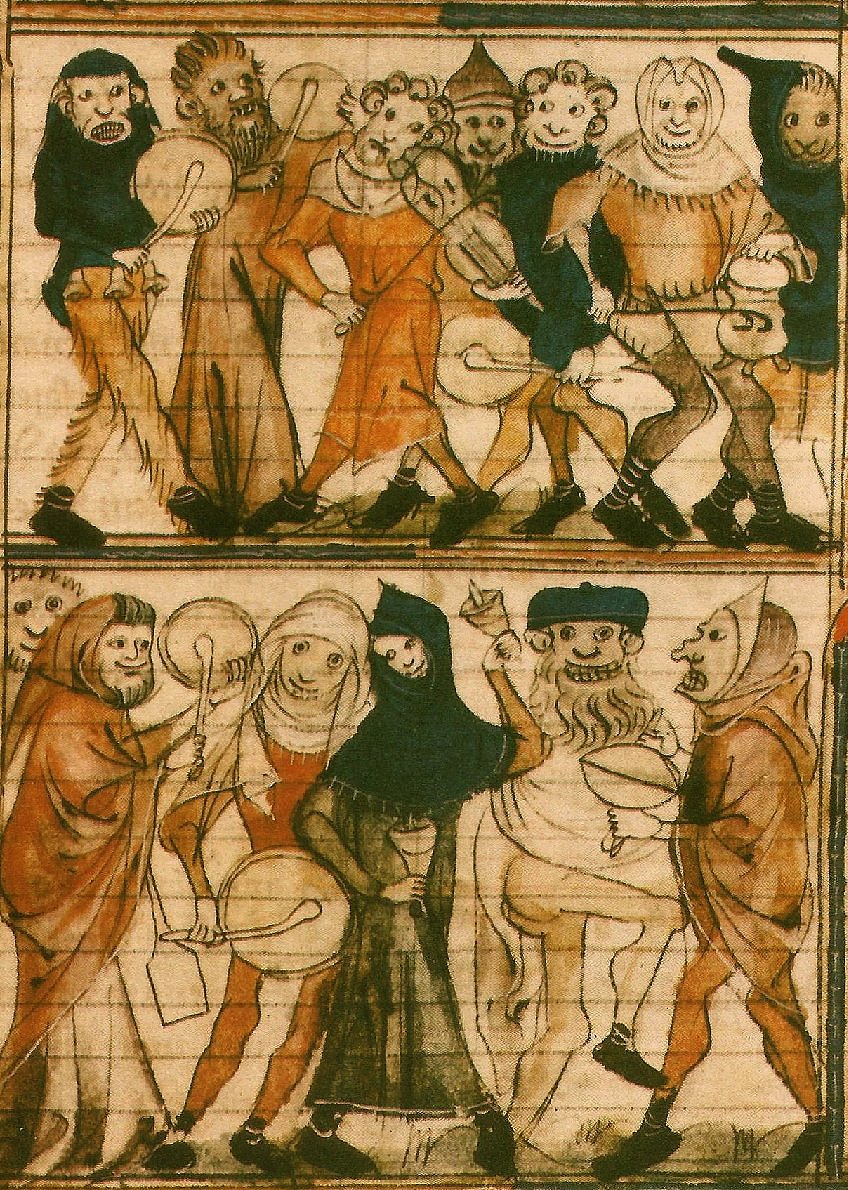
Detail from the 14th century Roman de Fauvel (from Nelli, 1979, below)

Higher up the social scale,
the Western French phenomenon of L'Amour Courtois (L'amor
fin or Courtly Love),
largely initiated by Duke William IX of Poitou in the eleventh century,
was, in the church's view,
a prelude to lasciviousness, lust-in-luxury, adultery and terminal moral
rot.
It quite reasonably identified Romantic Love as a kind of fake spirituality,
the apotheosis of lust
and the destroyer of fondness and respect.
William of Poitiers was
celebrated as the first of the Troubadours, literate composer-singers
and reciters
of love-poetry who spread through southern France, and, moving north,
crossed the linguistic frontier
of the Langue d'Oc, beyond which they were known as Trouvères.
Moving south into Spain they were among the influences on the 14th century
Libro de Buen Amor.
They also spread south-eastwards into Italy,
and north-eastwards to become Minnesingers in Germany.
One of the most famous, whose lyrics survive, was Bernart de Ventadorn.
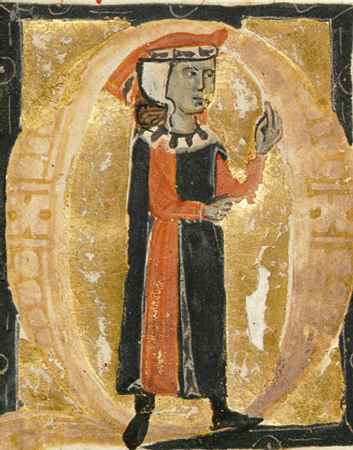
Usually travelling alone, they announced their arrival at a castle or
'stately home' by blowing a horn.
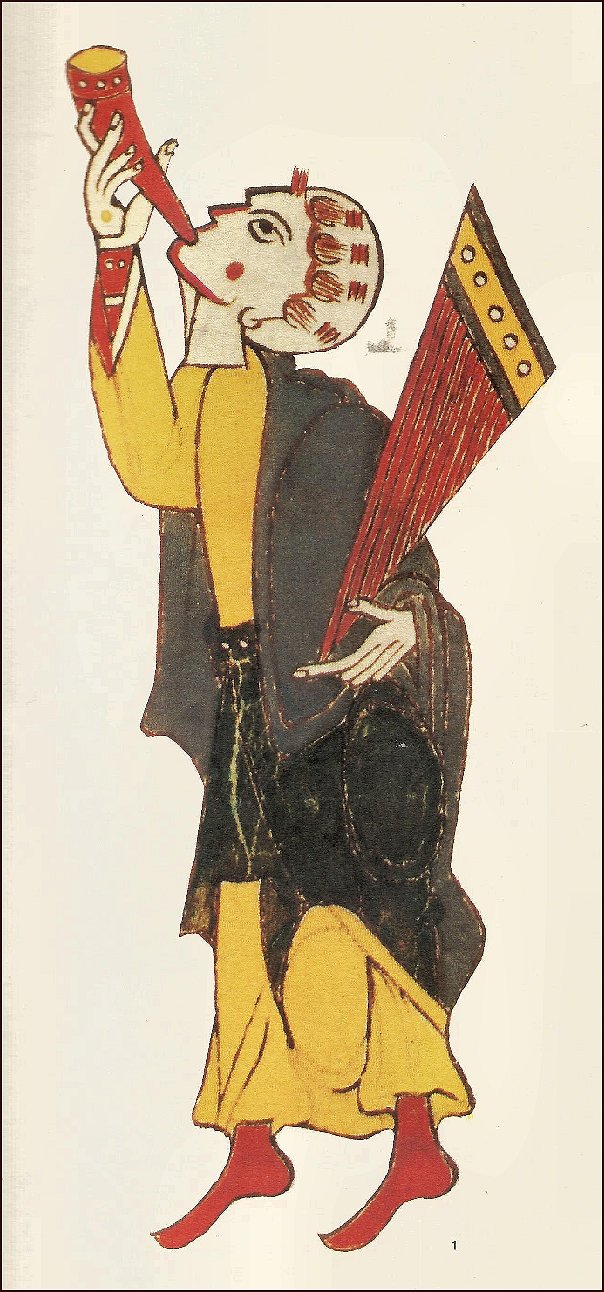
Eleventh-century troubadour with psaltery, announcing his arrival
by blowing his horn.
from Nelli, 1979.
One highly-regarded troubadour and friend of the rich was Folquet
of Marseille, of Genoese origin,
who suddenly 'converted' in 1200, became a monk...and eventually Bishop
of Toulouse.
He was one of the most cruel killers of men, women and children
during the 'Albigensian Crusade '(against the Cathars) – so extreme
that he was censured by other Catholics
For readers of French, I recommend two very good books by René
Nelli :
Troubadours
& Trouvères (Poitiers, 1979)
and
L'Erotique
des Troubadours (Toulouse, 1963)

Bosch: detail from
The Garden of Earthly Delights,
circa 1500.